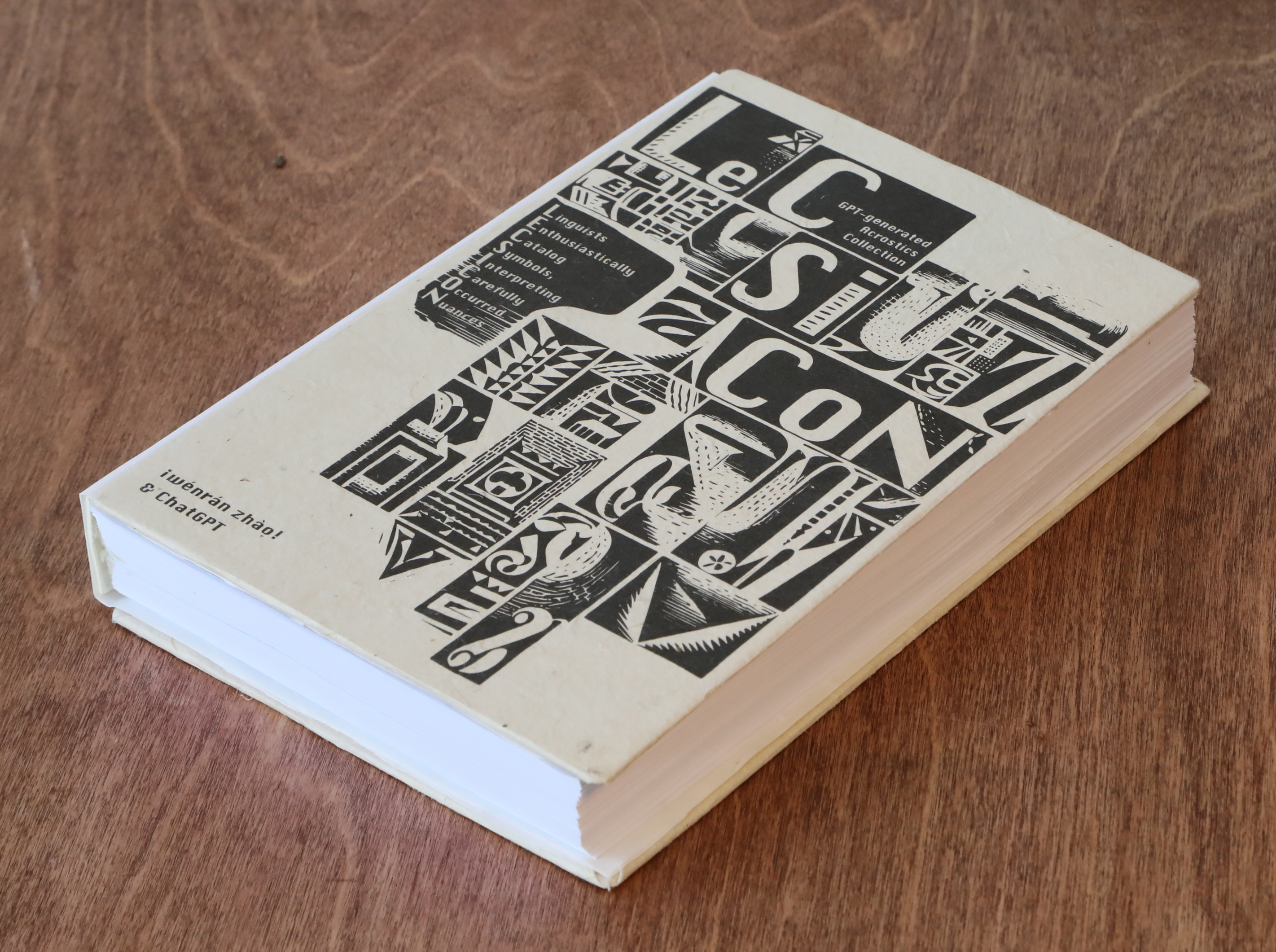
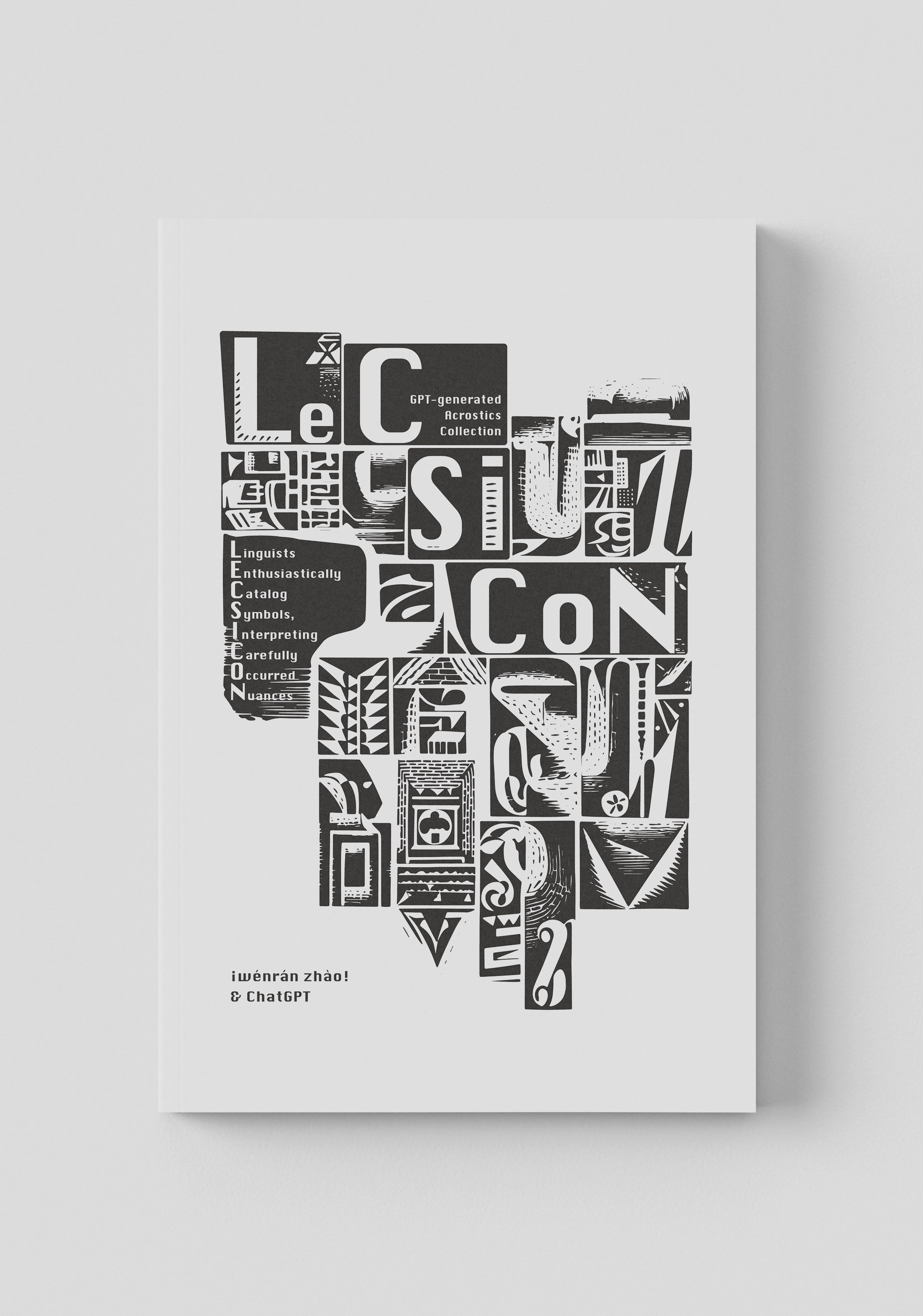
Lecsicon
- Mar. 2023
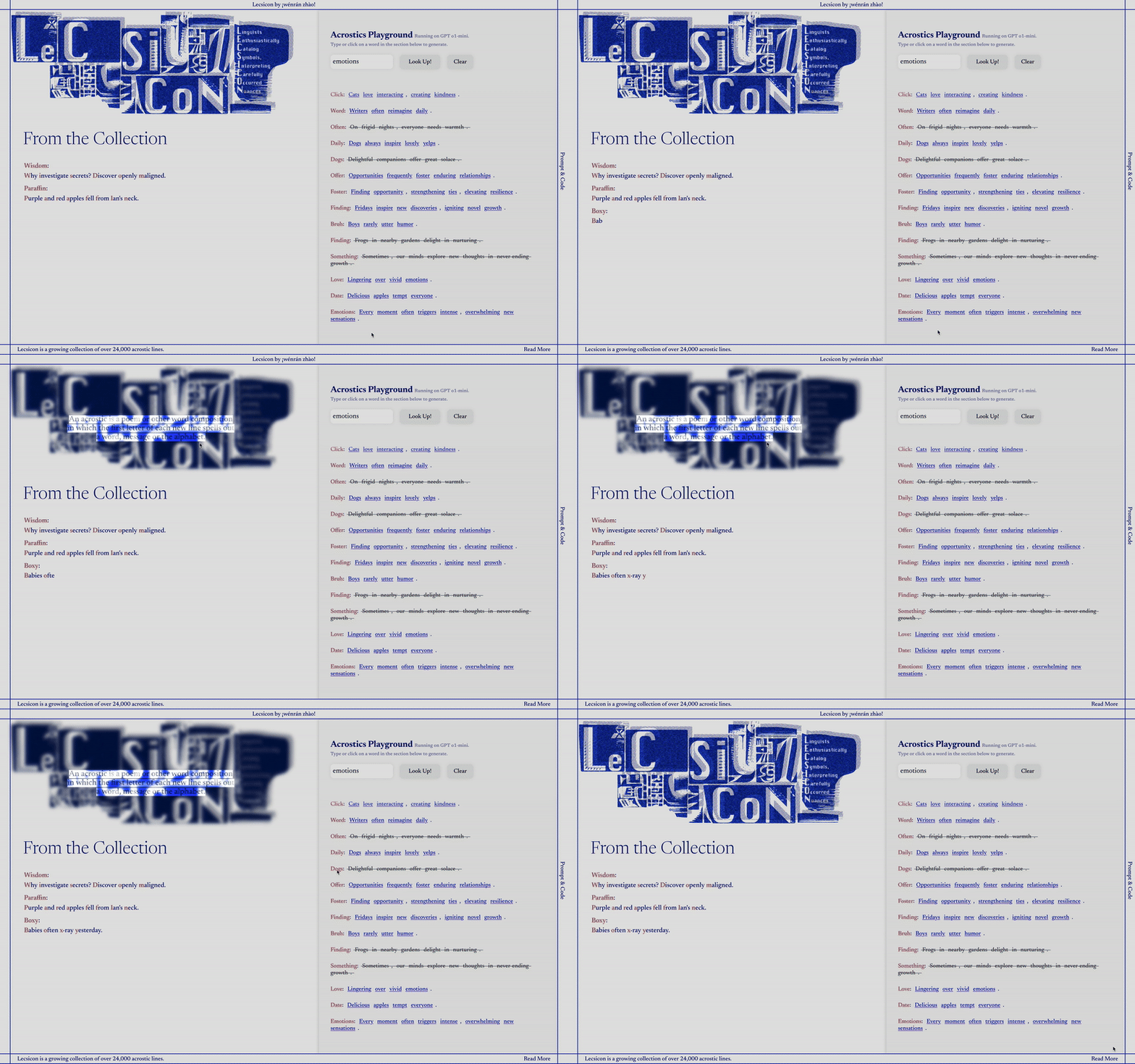
- To the website
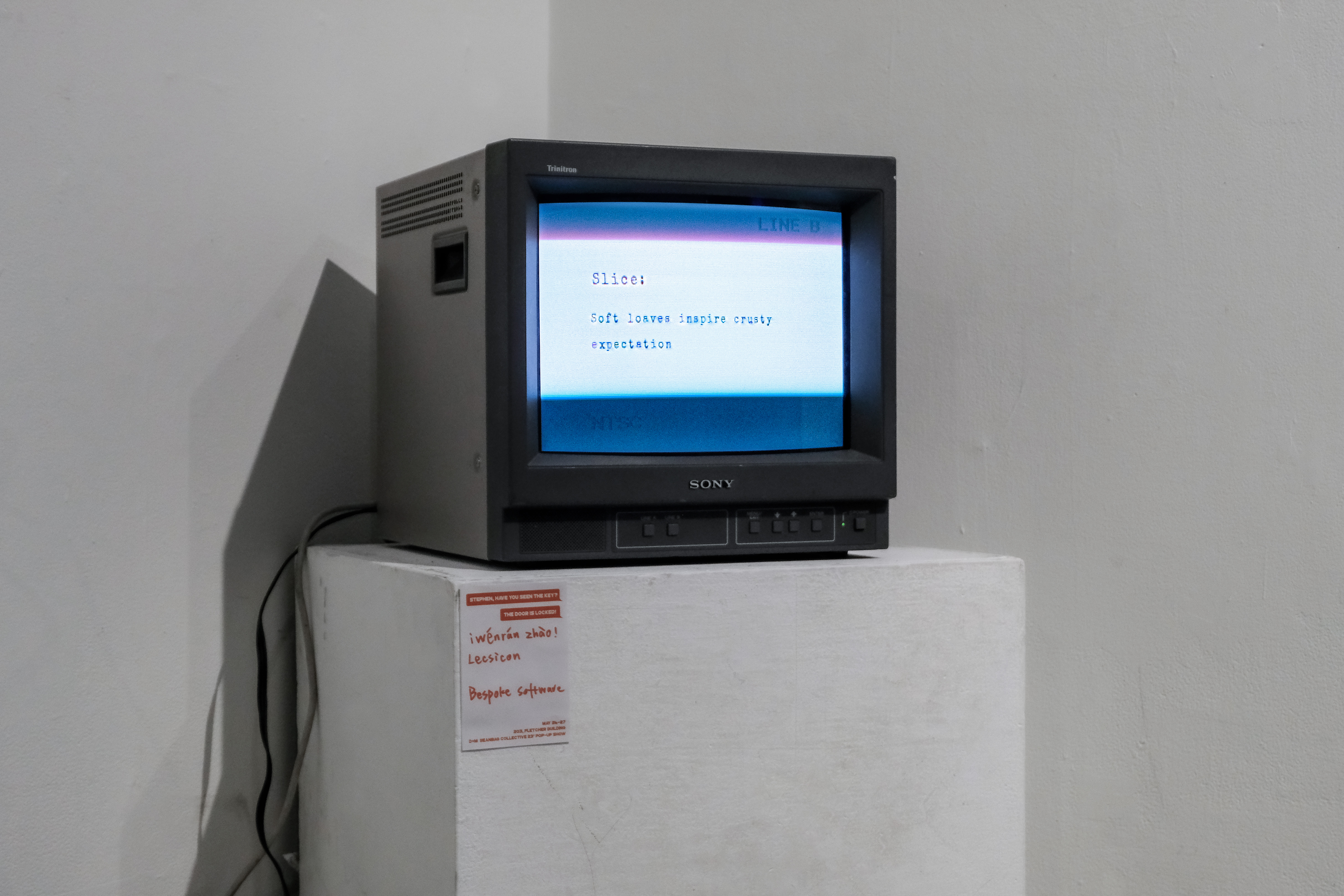
- Bespoke software / website / book (6’’ x 9’’ x 1.5’’)
- Published on The New River Spring 2023, ELO (Un)linked 2024
I will give you a word. Make a sentence or phrase with a series of words whose first letters sequentially spell out my word. Your sentence doesn't have to have a strong semantic connection with the word I give you.


Here're some good examples:

Cake - Creating amazing kitchen experiences.

Fire - Fierce inferno razed everything.

Smile - Some memories invoke lovely emotions.

Here's a bad example:

Abandon - Alice abandoned her plans to move to the city when she realized the cost of living was too high.


Now make a sentence for /WORD/.


According to our rules, there should be /N/ words in your sentence. Your response should only contain the sentence you make.
Above is a prompt I wrote for the large language model GPT 3.5 Turbo which currently powers chatGPT. In response to my prompt, the model creates acrostics but in sentences. Thousands of word-sentence pairs compose this project, Lecsicon: Linguists Enthusiastically Catalog Symbols, Interpreting Carefully Occurred Nuances.
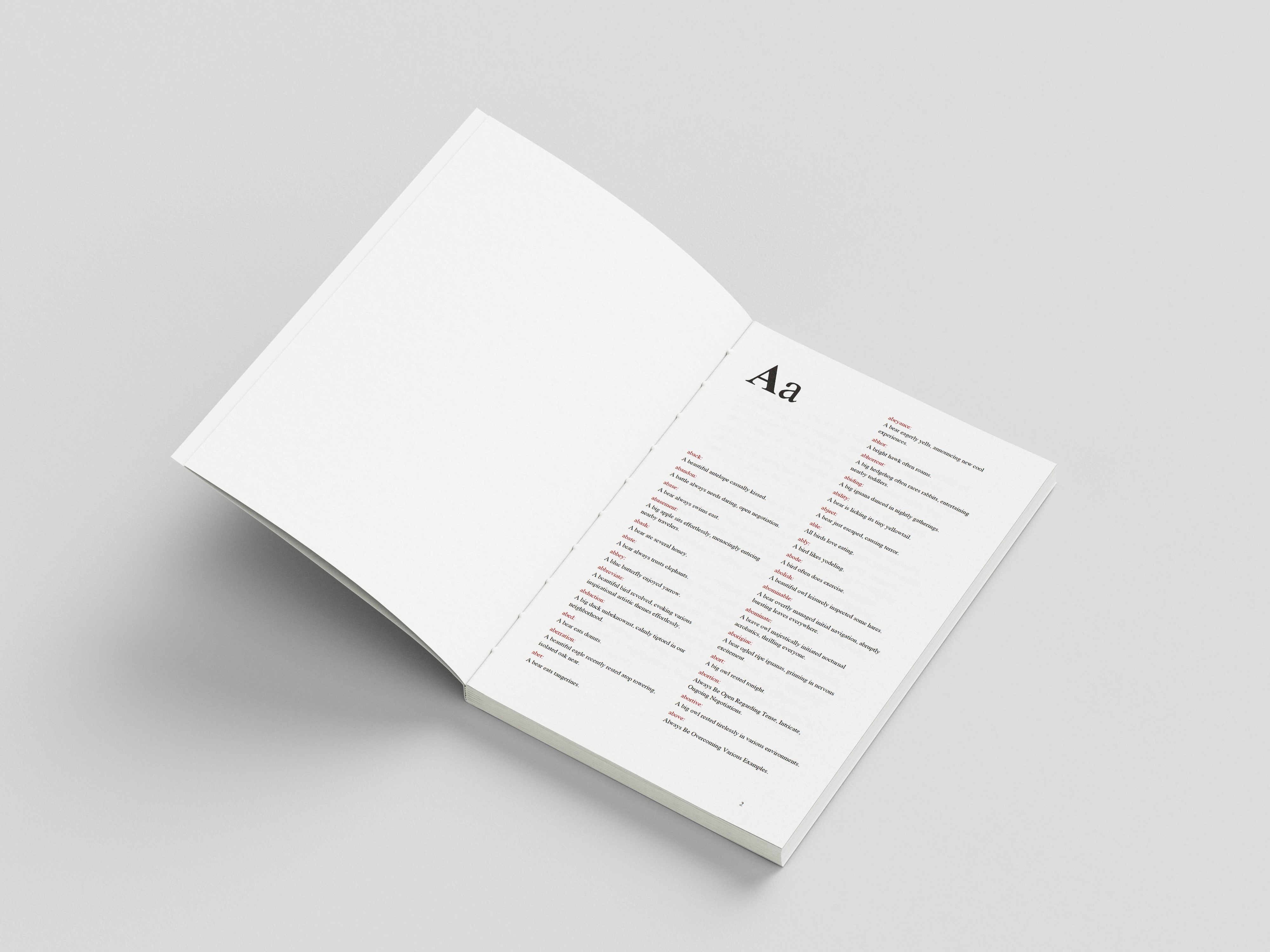
Language games like acrostics captivate people like me because there is a hidden layer behind putting words together following certain mechanisms. Making sense—the resulting sentences provide a greater context for the original words and reveal new perspectives. It’s not a coincidence that GPT makes sentences that relate to the original word’s meaning. Rather, it’s a deliberate calculation and balancing process to capture words based on their relations to each other: a ghost wandering through a latent word vector space. Any word in such a space is nothing but the linguistic associations around it, based on statistical computation of the patterns of the text huamans have produced. Sentences emerge from their context, and perhaps that’s why some entries are intriguing, such as “Music: Many unexpected sounds indicate creativity”, or “Date: Dinner and theater experience”. Lecsicon is only made possible by the fractal nature of the English language: the way we make sense of letters, words, sentences, and paragraphs.