Dad, Will You Teach Me Calligraphy?
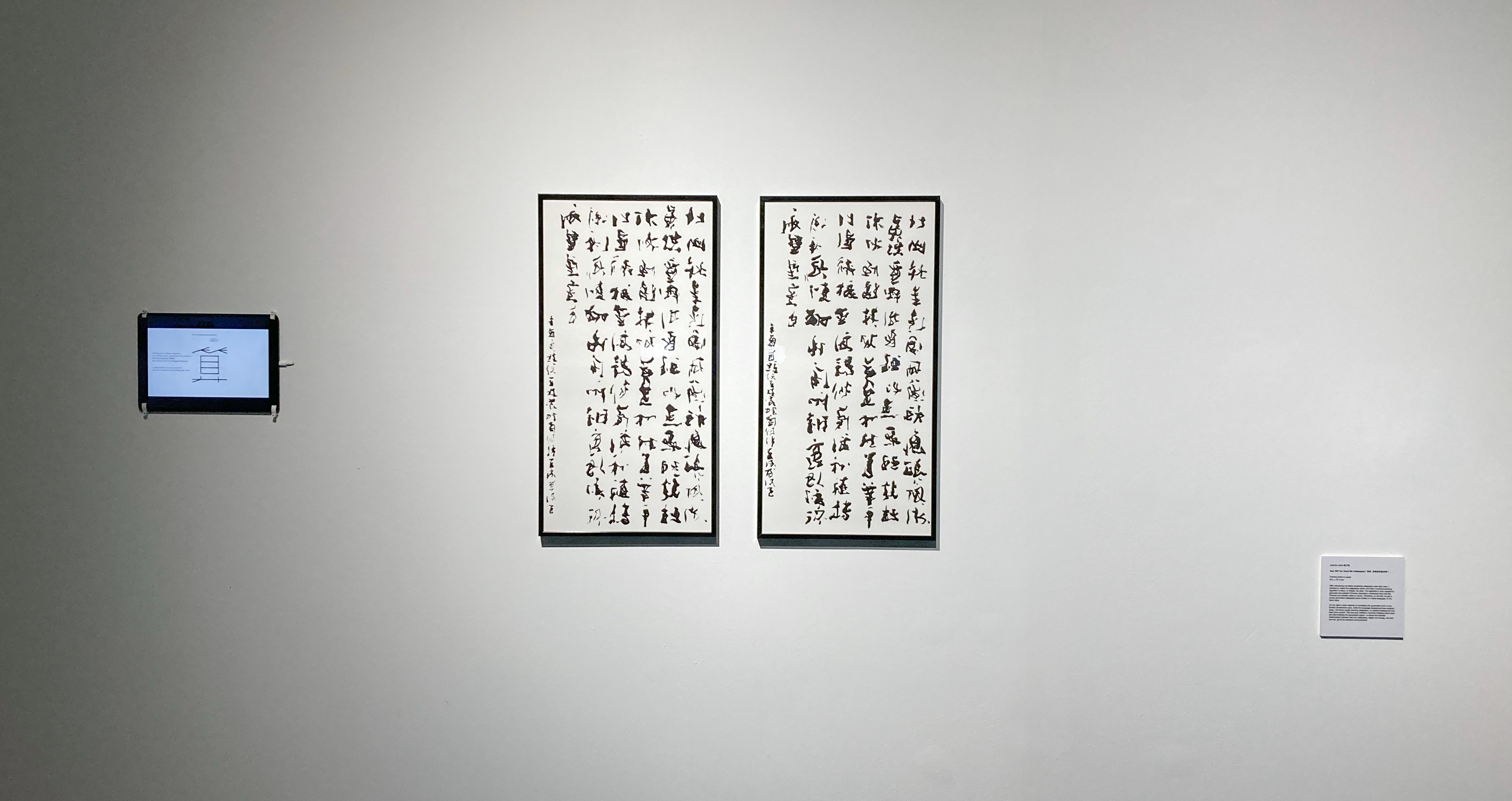
- Dec. 2021
- To the work’s website
- Print and calligraphy on rice paper; Video installation
- Keywords: Machine Learning, Pix2Pix, Chinese Calligraphy
Dad, Will You Teach Me Calligraphy? is a set of two calligraphy works: on the left, output from a neural network trained on my dad’s practice sheets; on the right, my dad’s copy of it.
My dad started practicing calligraphy when I was five. Growing up, practice sheets and discarded rice paper covered in brushwork always piled up on the floors of our home. Years later, it occurred to me that this was a dataset. I trained a small neural network on his work. I wanted to make something intimate, trained only on his hand, for no audience in particular. I was curious what it would take for a machine to get as good as him, knowing that the algorithms weren’t very robust back then and their output would be total trash by any calligraphic standard. The piles of practice sheets would have gone to waste anyway. Might as well do something with it.
My relationship with dad is pretty complex, as many are. I think about the years he spent trying to make me write right-handed, and teach me calligraphy, one of the few things he’s genuinely proud of, one of the few things he wanted to pass down, and almost impossible to do properly when you’re holding a brush in your left hand.
There’s something that interests me in the reversal. Calligraphy is already a practice of imitation: you learn by copying masters, absorbing tradition stroke by stroke over years. The machine distills that accumulated practice into something generative. And then my father copies the machine’s output back into his own hand, the child, behind the scenes, choreographing the whole thing. The normal direction of transmission is reversed, and perhaps so is the direction of power.
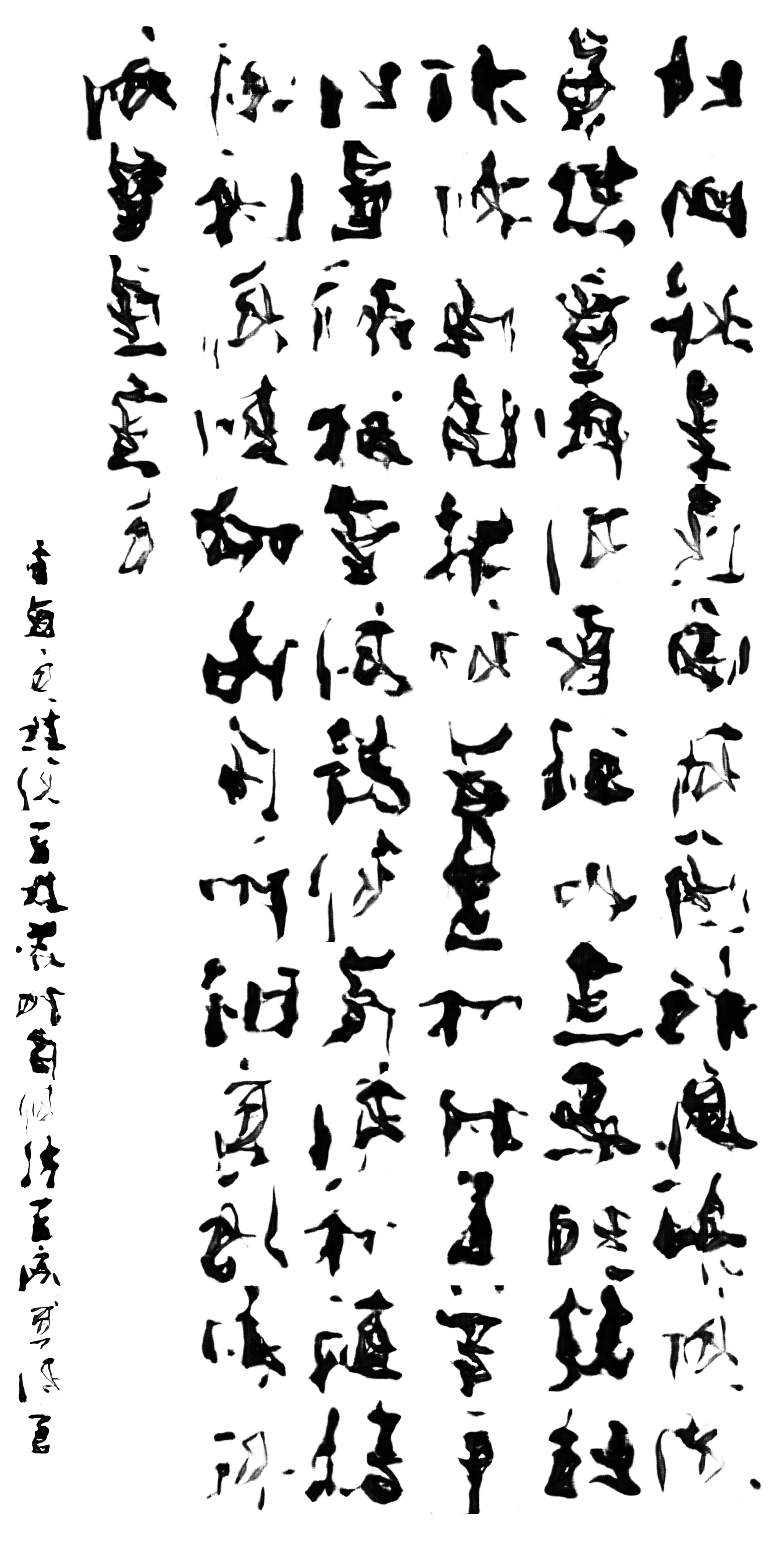
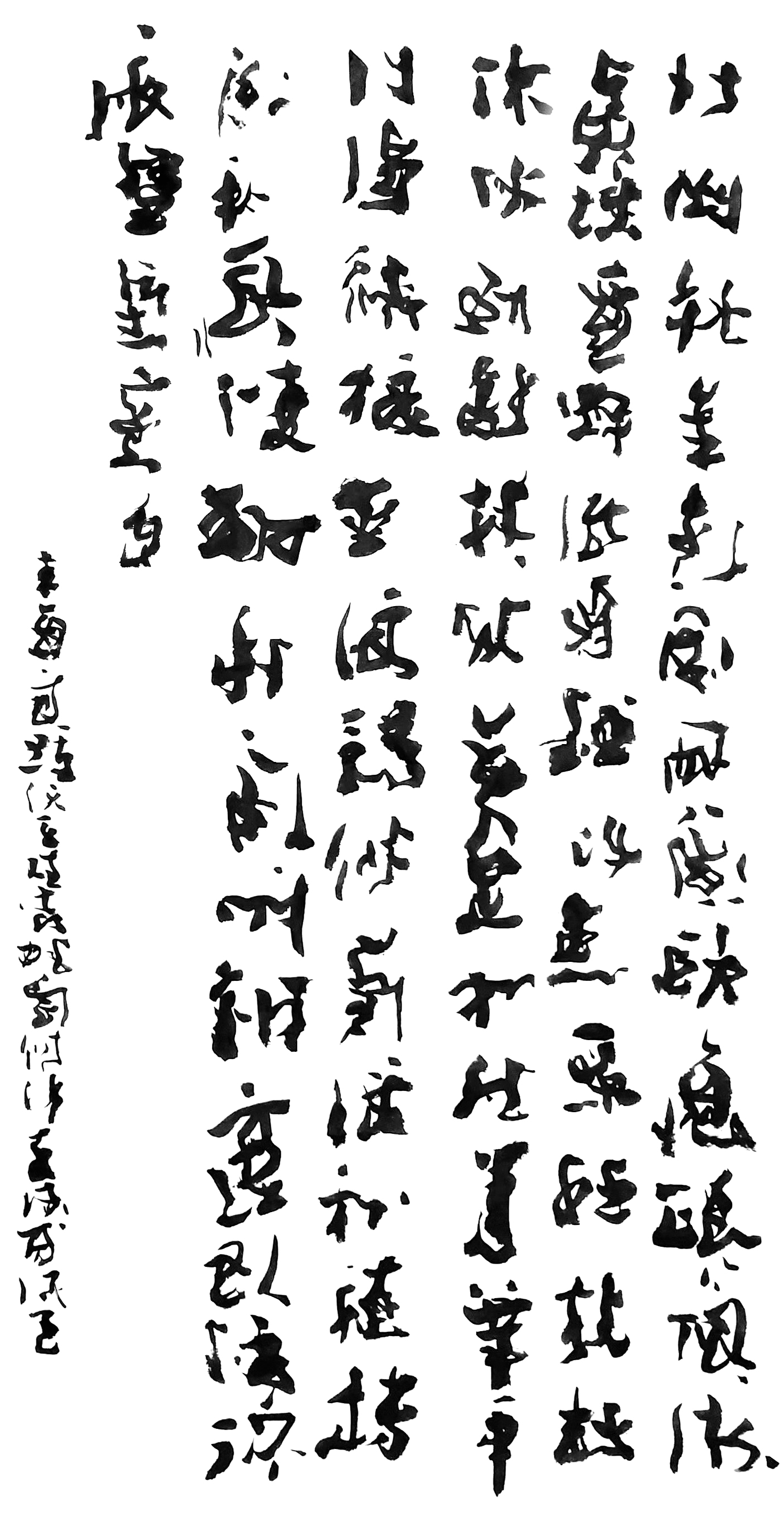
LEFT: generated calligraphy; RIGHT: dad’s replication of the generated calligraphy
*The custom software was developed based on the idea of Recursive Radical Packing Language proposed by artist Huang Lingdong. Part of the code was modified from Lingdong’s original project documented on Github.
Exhibited at SCM Annual, Singing Wave Gallery, Hong Kong, 2021